

The Future of Email Marketing (and What It Means for Small Businesses)

Understanding the future of email marketing is essential for small businesses, nonprofits, and marketers who want to stay ahead in a rapidly evolving digital landscape. This article explores the future of email marketing through 2026, focusing on emerging trends, transformative technologies, and actionable strategies tailored for small businesses and nonprofits. Whether you’re a business owner or a marketing professional, understanding these changes will help you stay competitive, build lasting customer relationships, ensure compliance, and maximize your email ROI.
Key Takeaways
- Email remains a top ROI channel in 2026 for small businesses and nonprofits, delivering 30:1 to 40:1 returns when combined with email automation and hyper-personalization. Hyper-personalization refers to the use of advanced data and AI to deliver highly tailored content and experiences to individual subscribers.
- The ever-evolving landscape of email marketing demands that marketers continually adapt to rapid changes in technology, strategy, and measurement to stay competitive and effective.
- Email marketing is a constantly evolving field, requiring marketers to adapt to new trends and technologies to remain effective.
- In 2025, AI tools are expected to help marketers optimize every aspect of their email campaigns, from subject line testing to send-time optimization, providing actionable insights that human analysis might miss.
- By 2025, interactive emails will be used by 97% of marketers, highlighting the growing importance of interactive elements in engaging audiences.
- Privacy-first data practices, AI-assisted email workflow tools, and mobile-first accessible design are the three non-negotiables for future campaigns.
- As privacy regulations evolve, marketers are shifting focus from traditional metrics like open rates to more meaningful engagement metrics such as click-through rates, conversions, and replies, which provide a better understanding of email campaign effectiveness.
- Interactive emails and newsletter-style content will drive retention and building relationships, not just one-time acquisition.
- Smarter lifecycle automation running 24/7 lets small marketing teams compete with larger competitors without adding headcount.
- Tools like VerticalResponse bundle automation, landing pages, and surveys, making emerging trends achievable even for lean teams with limited budgets.
Why the Future of Email Marketing Matters Right Now
In 2026, email marketing continues delivering industry-wide ROI in the 30:1 to 40:1 range. Despite competition from messaging apps like WhatsApp and platforms like TikTok, email remains central to small business growth. Unlike social channels subject to algorithm changes—some publishers have lost up to 80% of search traffic to phenomena like Google Zero—email is a fully owned audience asset you control.
For small teams with limited time and budget, understanding where email is heading helps prioritize efforts. You can’t chase every trend. But knowing which digital marketing shifts actually matter lets you invest wisely in what moves the needle.
The ever-evolving landscape of email has proven it can change quickly. Since 2018, we’ve seen GDPR enforcement in the EU, CCPA/CPRA in California, Apple’s Mail Privacy Protection in 2021 (which obscured open rates), and Gmail’s anti-spam updates in early 2024. The introduction of Apple Mail Privacy Protection (MPP) has made open rates less reliable and forced marketers to rethink analytics and data management. Each shift demanded rapid adaptation from email marketers.
This article explores major email marketing trends—privacy, AI tools, automation, interactivity, and advanced analytics—and what a business owner or nonprofit can practically do about each using platforms like VerticalResponse.
Privacy-First, Consent-Driven Email Programs
Key Regulations
Regulations like GDPR (EU, since 2018), CCPA/CPRA (California), and other essential email marketing regulations continue reshaping how lists are built in 2026. Privacy concerns aren’t optional considerations—they’re operational requirements affecting every email program.
First-Party and Zero-Party Data
Future-proof email marketing strategies rely on first-party data collected directly via sign-up forms, surveys, and preference centers. Zero-party data—where subscribers voluntarily share preferences—has become equally valuable. Zero-party data refers to information that customers intentionally and proactively share with a brand, such as preferences collected through polls and quizzes. Third-party cookies face deprecation in Chrome, elevating email’s role for owned customer data in a post-cookie world.
Practical Steps for Compliance
- Implement double opt-in processes
- Add clear consent checkboxes to forms
- Provide easy opt out options in every send
- Create preference centers allowing subscribers to choose frequency and topics
- Write transparent copy explaining what data is collected and how it’s used
Using AI or third-party enrichment tools requires careful alignment with privacy laws. VerticalResponse’s email marketing and automation tools—including sign-up forms, surveys, and list management—help small businesses capture consent, manage opt-outs, and segment ethically without needing a legal team.
Generative AI Across the Entire Email Workflow
AI’s Expanding Role in Email Marketing
By 2026, most marketing teams—including very small ones—use generative AI tools in at least one stage of their email process, applying principles from email marketing psychology to craft copy that resonates. AI has moved from experimental to essential for content creation, testing, and analysis. In 2025, AI tools are expected to help marketers optimize every aspect of their email campaigns, from subject line testing to send-time optimization, providing actionable insights that human analysis might miss.
AI Applications Across the Workflow
| Workflow Stage | AI Application |
|---|---|
| Subject lines | Generate multiple variants for A/B testing |
| Body copy | Draft initial versions for human refinement |
| Image ideation | Suggest visual concepts and styles |
| Segmentation | Recommend audience based groupings |
| Post-send analysis | Surface patterns in customer behavior |
| AI can help businesses automate tasks such as sending personalized emails and analyzing data to improve targeting and segmentation, making email marketing more efficient and effective. |
|
Real-World Examples
Concrete examples show real results. A local nonprofit used AI to condense their annual report into a three-email donor nurture series with personalized appeals, leveraging discounted tools from the VerticalResponse Non-Profit Program. A retail shop A/B testing AI-generated subject lines saw 30% higher opens when combined with behavioral data insights. Generative AI has made significant impacts in email marketing, with 34% of email marketers using AI for copywriting, reducing the time needed to produce an email from two weeks to less than one week for many teams.
Risks and Best Practices
- AI should support, not replace, human judgment for brand voice
- Fact-check all AI-generated copy before sending
- Never paste full customer data into public AI tools—data security matters
VerticalResponse users can pair external AI copy tools with the platform’s email editor and automation workflows to cut production time from days to hours while maintaining authenticity, applying core email marketing best practices to be more efficient, strategic, and effective in their campaigns.

Lifecycle Automation That Feels Human
The Shift to Lifecycle-Driven Email
The future of email marketing is lifecycle-driven. Onboarding, first purchase, repeat purchase, lapsed customer re-engagement, event follow-ups, and donor journeys for nonprofits—each stage deserves dedicated attention through email automation.
Automation has evolved from linear drip campaigns to smarter, behavior-based flows. These flows now leverage behavioral triggers—specific actions or signals such as abandoned carts or browsing patterns—to prompt targeted, timely emails. By using sophisticated, AI-driven email triggers that respond to these behaviors, marketers can deliver more personalized and relevant communication, enhancing customer experience and increasing engagement.
High-Impact Automations
- Welcome series personalizing content based on sign-up source
- Post-purchase sequences with milestone celebrations
- Re-engagement campaigns after 90 days of inactivity
- Survey-triggered nurture flows for potential customers who complete forms
Small teams don’t need dozens of flows. Three to five well-designed automations handle most high-value touchpoints and run 24/7 without constant oversight.
VerticalResponse’s automation capabilities—triggered emails based on sign-ups or date-based campaigns—let small businesses implement lifecycle programs without dedicated marketing ops staff, while VerticalResponse Classic offers additional tools for events, surveys, and contact management. This enables marketers to focus on strategy while automation handles delivery.
Rethinking Email Analytics and Data Strategy
The Impact of Privacy on Analytics
Apple Mail Privacy Protection (launched 2021) and Gmail’s continued tracking protections have weakened traditional metrics like open rates. By 2026, smart email marketers have shifted focus entirely.
Future-Proof Metrics to Track
- Click-through rates (actual engagement)
- Conversion rates (sales, donations, registrations)
- Revenue per email
- Unsubscribe rates (list health indicator)
- Reply rates (emerging loyalty signal)
- Long-term retention by segment
Centralizing and Interpreting Data
Small businesses can centralize data lightly by syncing email lists with their CRM, ecommerce platform, or donation system, then focus on what actually matters beyond open rates when interpreting performance. This reveals which subscriber segments generate the most value based on purchase history and past interactions.
Best Practices for Real-Time Data
- Use UTM tagging on all campaign links
- Tie email traffic to Google Analytics 4
- Run simple A/B tests on subject lines and calls-to-action monthly
- Track revenue or goal completions back to specific sends
VerticalResponse’s reporting—clicks, unsubscribes, device data, and link email performance—combines easily with website analytics to build a realistic view of campaign ROI without needing a data scientist.
Email Newsletters as Retention and Revenue Engines
The Rise of Newsletters
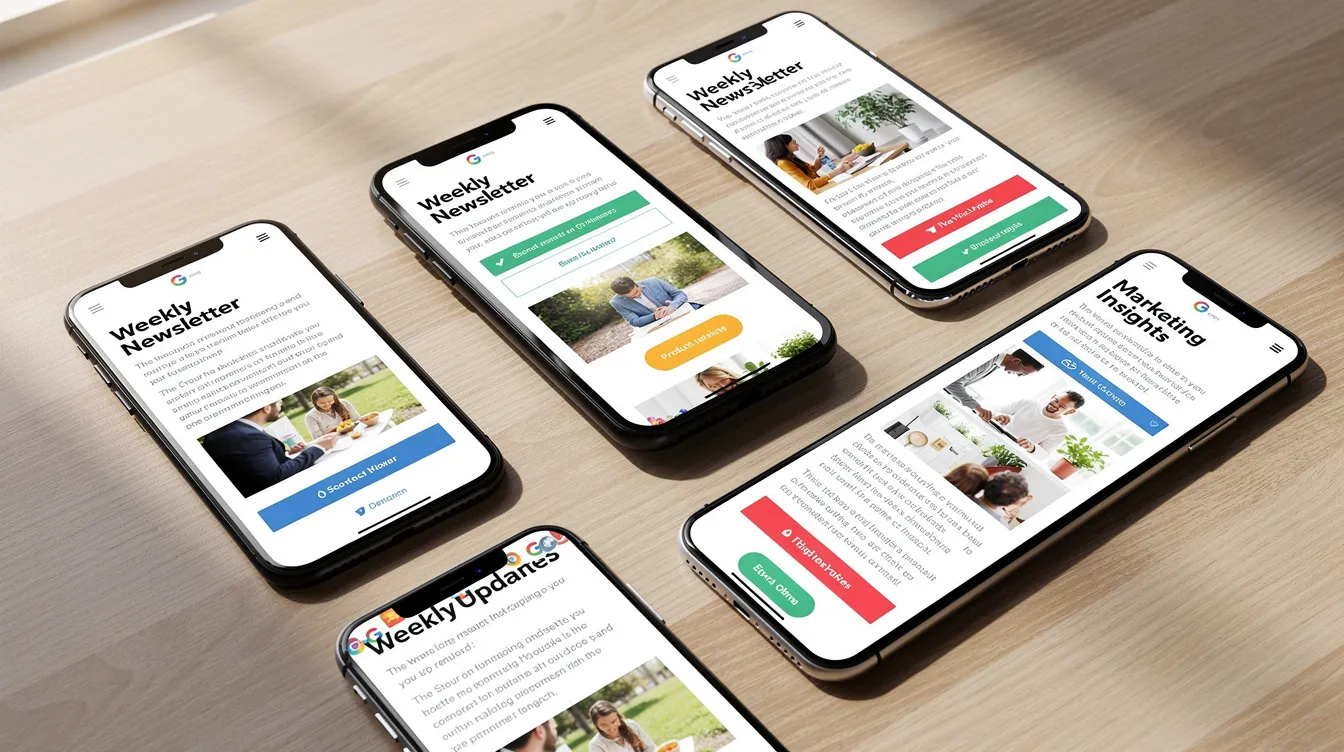
By mid-2020s, newsletters re-emerged as a primary way brands build owned audiences, reflecting how the email newsletter became cool again as a relationship-building channel. They drive repeat purchases and donations rather than just one-off promotions, focusing on better engagement over time.
Content Strategies for Newsletters
Future newsletters blend education, storytelling, and light promotion, often drawing on diverse email newsletter content ideas and topics to keep readers engaged. They deliver relevant content that subscribers actually want to read—not just sales pitches.
Recurring Format Examples
- Weekly “what’s new” digests with tips
- Monthly donor impact updates with success stories
- Quarterly product roundups highlighting customer favorites
- Seasonal guides tailored to mobile users
Consistent cadence (weekly, biweekly, or monthly) and recognizable layout help subscribers know what to expect. Short sections optimized for phones improve the customer experience and keep readers engaged.
VerticalResponse makes it easy to use templates, duplicate past newsletters, and track which content blocks earn the most clicks, aligning with many top newsletter strategies for boosting engagement and reach. This data informs future content strategy and helps you stay relevant to your target audience.
Interactivity, Design, and Accessibility in the Inbox
The Growth of Interactive Email
By 2026, interactive features and visually rich emails are far more common. Interactive elements—such as polls, quizzes, mini-games, and buttons that change state—are key components of modern email marketing, increasing engagement, enabling two-way interactions, and providing immersive, entertaining content. Carousels and polls appear regularly, transforming static content into engaging experiences and leading to significantly higher click-to-open rates. Notably, B2C brands are more than twice as likely as B2B brands to incorporate CSS-based interactivity into their emails, making it an effective tool for engaging audiences. However, these interactive elements must balance with accessibility and deliverability requirements.
Dynamic content blocks, which adapt in real time based on user interactions and preferences, are increasingly used to enhance personalization. Dynamic content refers to email elements that change automatically for each recipient based on their data or behavior, such as showing different product recommendations or offers.
Practical Enhancements for Engagement
- Clear calls-to-action with big tappable buttons
- GIFs used sparingly for visual interest
- Interactive elements like embedded polls, quizzes, and mini-games to encourage participation and make the experience memorable
- Simple feedback links for engagement
- Dynamic content blocks personalized by segment, which adapt in real time based on user interactions and preferences, enhancing personalization
Accessibility and Mobile Optimization
Accessibility is non-negotiable for consumer expectations and deliverability. There is more emphasis on accessible design features such as alt text, color schemes, and screen reader compatibility to ensure inclusivity for users with disabilities. High-contrast colors, readable font sizes (14-16px minimum), logical heading hierarchy, descriptive alt text, and layouts compatible with screen readers are standard requirements. Effective emails should be both visually appealing and accessible across various devices and user abilities, with testing and soft-launching recommended to enhance overall user experiences.
Mobile optimization matters when 50%+ of opens happen on mobile devices. In the next five years, businesses are expected to invest in responsive email templates and test their campaigns on various devices to ensure a seamless experience for mobile users. Email campaigns must be optimized for mobile screens, including using responsive design, single-column layouts, and concise copy to enhance readability. Short sections and testing across popular devices before sending ensure personalized experiences reach everyone properly.
Zero-Party Data Collection and Segmentation
Zero-Party Data collection is also on the rise, with brands asking users to share their preferences through polls and quizzes. More than 90% of marketers reported that segmentation boosts email performance, making it one of the simplest and most effective ways to personalize email marketing campaigns.
Brand Indicators for Message Identification (BIMI)
Brand Indicators for Message Identification (BIMI) is an emerging standard that allows brands to display their logo next to their emails in the inbox, increasing trust and recognition. Implementing BIMI can help your emails stand out and reassure recipients of your brand’s authenticity.
Smarter Segmentation and Cross-Channel Journeys
The Decline of Batch-and-Blast
Batch-and-blast emails to entire lists continue declining in email performance, and staying ahead means keeping up with industry trend shifts that favor relevance over volume. The future means sending fewer, more relevant messages to clearly defined segments—delivering the right message through personalized, targeted communications at the right time, staying ahead through precision rather than volume.
Comparison: Batch-and-Blast vs. Segmented Campaigns
| Approach | Description | Pros | Cons |
|---|---|---|---|
| Batch-and-Blast | Sending the same email to the entire list | Simple, fast | Low relevance, higher unsub |
| Segmented Campaigns | Targeting specific groups with tailored content | Higher engagement, lower unsub | Requires more setup, data |
Key Segmentation Strategies
- Engagement level (active vs. at-risk subscribers)
- Lifecycle stage (new subscriber vs. loyal customer)
- Content interests based on user behavior
- Donation level for nonprofits
- Geography for local promotions
Segmentation enables more effective personalization by allowing marketers to tailor content to specific audience groups, which can then be integrated across multiple marketing channels for greater impact. Predictive analytics now enables AI tools to determine optimal send times for individual subscribers, further enhancing engagement rates.
Over 90% of marketers reported that segmentation boosts email performance, highlighting the importance of integrating email marketing with data-driven strategies across various channels. In fact, 71% of consumers are frustrated by irrelevant messages, underscoring the need to move beyond basic personalization—like using first names—to more tailored content based on customer behavior and preferences.
Cross-Channel Integration
Email marketing campaigns are increasingly being integrated with other channels such as social media, SMS, and chatbots to create a more cohesive and effective marketing strategy that reaches customers through multiple touchpoints. Email increasingly ties into other channels, creating unified relevant campaigns. An email promotes a landing page, captures survey responses, and triggers retargeted follow-ups—a complete customer journey orchestrated across touchpoints.
Example Workflow for Cross-Channel Journeys
- Email announces new product to customer segment
- Link leads to VerticalResponse landing page
- Survey captures product preferences
- Automation sends tailored follow-up based on responses
As email marketing evolves, marketers are expected to leverage real-time data and behavioral insights to create dynamic segments that enhance integration with other marketing channels, ensuring messages are timely and relevant.
Even basic segmentation—separating customers from prospects, or donors from volunteers—dramatically improves clicks and reduces unsubscribes, especially when paired with fresh email campaign ideas tailored to each audience. More than 90% of marketers reported that segmentation boosts email performance, making it one of the simplest and most effective ways to personalize email marketing campaigns. You don’t need complex systems to send emails that feel like personalized emails rather than mass blasts.
How Small Teams Can Prepare for the Future Today
Priority Actions for Small Teams
Preparing for future email marketing doesn’t require overhauling everything at once. Here’s a 3-6 month roadmap for resource-constrained teams:
- Clean inactive contacts (improves deliverability immediately)
- Implement or improve welcome automation for new subscribers
- Create a re-engagement sequence for lapsed contacts (90+ days inactive)
- Refresh templates for mobile optimization and accessibility
- Add a simple preference center to forms
- Set up basic UTM tracking and revenue attribution
- Run one small experiment monthly (AI subject lines, new segment, survey campaign)
The right tools make implementation manageable. VerticalResponse bundles email creation, automation, landing pages, and surveys in one platform. For stretched teams, Pro+ full-service options provide campaign support without hiring additional staff, and ongoing VerticalResponse support resources help you troubleshoot, learn, and refine your approach over time.
Start small, build gradually. Each monthly experiment—whether testing new technologies or trying a different segment—builds capabilities that compound over time.
Ready to future-proof your email strategy? Explore how VerticalResponse’s automation and segmentation features can help your small team compete with larger organizations while keeping workload manageable.
FAQ: Future of Email Marketing
Will AI Replace Human Email Marketers?
AI automates repetitive work—drafting first-pass copy, generating test ideas, analyzing behavioral data—but humans remain essential for strategy, brand voice, and understanding the right person to target. A business owner might use AI to outline a campaign while still deciding promotion details, offer limits, and calendar fit. VerticalResponse users can pair AI tools with the platform to accelerate campaigns without sacrificing authenticity or control over messages.
How Should I Measure Email Success If Open Rates Are Unreliable?
Focus on clicks, conversions (sales, bookings, donations, sign-ups), and unsubscribe rates as primary success signals. Tie campaign links to tracked landing pages so revenue or form fills attribute back to specific sends. VerticalResponse’s reporting combined with basic web analytics gives small teams enough data for smart decisions without hiring a data scientist to interpret traditional metrics.
Is Email Still Worth It Compared to Social Media and Messaging Apps?
Email remains one of the only fully owned channels not controlled by algorithms, and it works even better when you repurpose content via social media recap emails that extend the reach of your best posts. It continues driving strong ROI when used alongside social, SMS, and organic search from other channels. Social and messaging excel at quick real-time engagement, while email handles deeper storytelling and lifecycle nurturing. Use email as your hub, promoting landing pages and surveys through VerticalResponse campaigns to build a resilient audience.
How Can a Very Small Team Keep Up With All These Trends?
Start with basics—cleaning lists, improving mobile templates, adding one or two automations—before experimenting with advanced AI or interactivity. As you grow, refine your cadence using email frequency best practices and choose the right tools and email marketing pricing and plans to match your volume and features. Batch content creation monthly, use templates, and repurpose content across email, blog, and social to stay informed without burning out. VerticalResponse’s ease of use and optional full-service support let time-strapped teams benefit from latest trends without additional staff.
What’s the First Thing I Should Change in My Email Program for the Future?
Begin with a modern welcome series and mobile-friendly template—these affect nearly every new subscriber and all future campaigns. Simultaneously review consent clarity, unsubscribe processes, and basic list hygiene to improve deliverability. These quick wins become the foundation for layering in AI assistance, deeper segmentation, and more advanced automation over the next 6-12 months using VerticalResponse.
© 2026, Ahsan Amin. All rights reserved.





 Features
 Pricing
 Partner
 Blog
Blog Support
 More resources
 Terms of Services
 Privacy Policy