Best Holiday Marketing Tactics (That Actually Drive Revenue)

The holiday season is a compressed window where small businesses and nonprofits can generate a disproportionate share of their annual revenue-or miss it entirely. The difference comes down to execution: the right offers, sent to the right people, at the right time. This guide breaks down the best marketing holidays tactics that actually move the needle, from early planning through post-holiday relationship building, with a focus on what works for lean teams using email as their primary channel.
Key Takeaways
- Winning holiday marketing in 2026 means starting your planning by August, aligning email, social, and onsite offers into a cohesive marketing strategy, and staying flexible week by week as real-time data comes in.
- Email marketing campaigns remain the workhorse of holiday revenue-especially around Black Friday, Cyber Monday, Small Business Saturday, and the final shipping cutoff week. Email marketing returns an average of $36 for every $1 spent, making it far more cost-effective than traditional advertising channels.
- Segmentation, customer journey–based automations, and personalization (subject lines, product picks, send time) make all the difference in cutting through crowded inboxes. Email segmentation can lead to a 760% increase in revenue.
- Small businesses and nonprofits can compete with bigger brands by focusing on customer loyalty, storytelling, and smart use of email marketing tools like VerticalResponse.
- Measure success beyond opens-track revenue per email, list growth, and post-holiday customer retention to improve future campaigns year over year.
What Counts As “Holiday Season” For Marketers?
For marketers, the holiday season runs roughly from early October through mid-January-and sometimes into February. It’s not just about Christmas. Your overall marketing strategy should account for a full calendar of opportunities, each with different audiences, tones, and urgency levels.
Here’s a quick reference for 2026:
| Month | Holiday / Event | Priority |
|---|---|---|
| October | Halloween (Oct 31) | Nice-to-have |
| November | Diwali (Nov 8) | Audience-dependent |
| November | Thanksgiving (Nov 26) | Must-do (U.S.) |
| November | Black Friday (Nov 27) | Must-do |
| November | Small Business Saturday (Nov 28) | Must-do (SMBs) |
| November | Cyber Monday (Nov 30) | Must-do |
| December | Giving Tuesday (Dec 1) | Must-do (nonprofits) |
| December | Hanukkah (Dec 11–18) | Audience-dependent |
| December | Green Monday (Dec 14) | Nice-to-have |
| December | Free Shipping Day (mid-Dec) | Nice-to-have |
| December | Christmas (Dec 25) | Must-do |
| December | Kwanzaa (Dec 26–Jan 1) | Audience-dependent |
| January | New Year’s Day (Jan 1) | Must-do |
| February | Lunar New Year (Feb 17, 2027) | Audience-dependent |
Quirky days like National Ugly Christmas Sweater Day can work for playful brands, but don’t force it. Choose holidays that genuinely fit your target audience and brand values. And remember: audience location and culture change which holidays matter. A subscriber base heavy in the U.K. won’t care about Thanksgiving; an APAC-focused list may prioritize Lunar New Year and Diwali over Black Friday.

The Power Of Holiday Email Marketing In 2026
Email marketing is still the most reliable digital marketing channel during Q4. You own the relationship, you have a direct line to the inbox, and email marketing delivers measurable results through tracking opens and clicks-unlike social algorithms that can throttle your reach overnight. According to industry research, 29% of merchants report email as their most effective marketing channel, and that figure climbs during November and December, which are prime times for email engagement.
The numbers support this: email marketing delivers an average ROI of $36 per $1 spent, with some retail brands reaching $45–$58 per dollar during holiday campaigns that layer segmentation, loyalty offers, and automation. The average open rate for branded emails is 35.63 percent, and abandoned cart and browse-recovery emails perform especially well during the holiday shopping rush-recovering 5–15% of abandoned carts.
Email also supports every other channel. Your holiday promotions on social media, paid ads, and landing pages work harder when email is nurturing and converting interested visitors. VerticalResponse is built specifically to help small businesses and nonprofits set up holiday email campaigns, landing pages, and simple automations-without needing a big marketing team.
Planning A Holiday Marketing Strategy (Start Early, Stay Agile)
The best holiday marketing tactics start with a clear holiday marketing strategy, not one-off blasts. Planning should begin by late summer so you have time to test, build assets, and enter peak season with confidence. Email automation allows scheduling campaigns weeks in advance, freeing your team to focus on real-time adjustments.
Focus on three pillars:
- Clear goals: What does success look like? Revenue targets, list growth, donation milestones.
- Budgets and offers: What can you afford to discount, bundle, or give away? What margins can you protect?
- Integrated channel plan: How will email campaigns, social media, your website, and possibly direct mail work together?
Your marketing strategy should include contingency plans. If a product sells out early, have backup messaging ready. If one channel underperforms, be ready to shift budget or cadence. Flexibility is what separates a plan from a rigid schedule.
Set Clear Holiday Goals And KPIs
Concrete goals keep your marketing efforts focused. Rather than vague “sell more,” set targets like “Increase Q4 email revenue by 25% vs. 2025” or “Grow list by 2,000 email subscribers by December 31, 2026.”
Typical KPIs to track:
- Open rate and click-through rate
- Click-to-open rate (CTOR)
- Conversion rate and revenue per email
- Average order value
- Unsubscribe and spam complaint rates
- For nonprofits: donation rate and average gift size
Use historical data from last year’s holiday email campaigns to guide expectations. Compare your Black Friday 2025 key metrics to set realistic 2026 targets. A/B testing can optimize holiday email campaigns for better performance-run tests on subject lines, send times, and calls to action in October so your final holiday pushes in late November and December are fully optimized.
Tag and label every holiday campaign inside your email marketing software so performance is easy to analyze in January.
Holiday Email Marketing Timeline (Month‑By‑Month)
Here’s what the email marketing process looks like month by month for a small business:
- August–September: Lock in your email marketing strategy, plan offers, grow your contact list with signup forms, and design core email templates. Do your market research now.
- October: Send early “holiday preview” campaigns, Halloween promos, and test subject lines. Research shows emails sent between 7 p.m. and 8 p.m. see higher open rates during holidays-test this timing now.
- Early November: Launch gift guides, VIP teasers, and early-bird offers. Begin warming up your list with relevant content.
- Black Friday/Cyber Monday week (Nov 27–30, 2026): Highest-intensity promotional emails. This is your highest-volume send window.
- December: Shipping cutoff reminders, last-minute digital gift pushes, flash sales, Green Monday (Dec 14), and Giving Tuesday follow-ups for nonprofits.
- Late December–January: Post-holiday clearance, loyalty campaigns, thank-you emails, and stewardship messages.
Work backwards from shipping deadlines and nonprofit campaign cutoffs to schedule final email pushes and confirmation emails. If you serve global audiences, adjust timelines for regions that celebrate Diwali or Lunar New Year rather than U.S. Thanksgiving.

Segmenting And Understanding Your Holiday Audience
Segmentation is what separates email marketers who drive sales from those who drive unsubscribes. During the holiday season, inboxes overflow. Sending the same message to your entire list is a fast path to fatigue and opt out requests.
Segmenting email lists improves engagement and conversion rates dramatically. Campaigns using effective segmentation see a 14.31% higher open rate, and segmented lists can see up to a 760% increase in revenue. Use demographics and behaviors for effective audience segmentation-combining purchase history, engagement level, and interest categories.
Personalized emails can increase open rates by 26%, and 54 percent of adults open marketing emails relevant to their interests. Email marketing allows for personalized messaging at scale, which is exactly what you need when holiday volume surges. Good segmentation also lets you give subscribers choices about holiday frequency, such as a “fewer emails” preference link or a “holiday deals only” segment, protecting brand loyalty and keeping complaints low.
Key Holiday Segments To Create
Build these segments before November:
- VIP customers: Top spenders or most frequent buyers. Give them early access and exclusive holiday deals.
- Recent first-time buyers: Send reassurance, gifting ideas, and curated gift guides to simplify the purchasing process for shoppers.
- Lapsed customers (no purchase in 6–12 months): Strong reactivation offers. Try win-back campaigns with compelling incentives.
- Window shoppers: Clicked but didn’t buy. Retarget with browse abandonment flows.
- Deal hunters: Respond strongly to discounts and flash sales. Segment them so you don’t discount-train your full list.
- Loyal donors or members (nonprofits): Impact-focused storytelling and year-end giving appeals.
Example: A local pet supply boutique might segment VIPs for a “Black Friday early access” email on November 26, send first-timers a “Holiday Gift Guide for Dog Lovers,” and use a reactivation offer (“We miss you-15% off your next order”) for previous customers who haven’t purchased in six months. An animal shelter could segment annual donors for a Giving Tuesday appeal and monthly donors for an impact update.
Add at least one behavior-based segment triggered by browsing or cart abandonment to power your automated emails.
Mapping The Holiday Customer Journey
The customer journey compresses during holidays. Awareness, consideration, and decision stages that normally take weeks can collapse into days.
Map four journey stages for the season:
- Discovery (early Oct–early Nov): Educational content, gift guides, and holiday spirit–themed storytelling. For nonprofits, this is awareness and impact sharing.
- Comparison (mid-November): Product comparisons, reviews, user-generated content to build trust and social proof. Collaborating with influencers can increase consumer willingness to buy from brands during this stage.
- Purchase (Black Friday through mid-December): Urgency-driven offers, shipping cutoff reminders, flash sales. Creating urgency and relevance is crucial for holiday marketing success.
- Post-purchase/loyalty (late Dec–January): Thank-you emails, feedback requests, loyalty program invitations.
Align landing pages and social posts to the same journey stages so the experience feels consistent across marketing channels. For nonprofits, the journey might center on awareness, impact storytelling, donation appeals around Giving Tuesday and year-end, and stewardship emails in January.
Holiday Content Creation: Offers, Stories, And Email Structure
Content creation during the holidays is more than just slapping a discount on a red background. It includes storytelling, email templates, subject lines, and consistent branding that makes engaging messages resonate.
Cover three types of holiday email content:
- Promotional offers: Discounts, bundles, limited-time bundle deals that can help increase average order value, and offering free shipping as an effective incentive for e-commerce conversions.
- Helpful content: Targeted gift guides that effectively enhance holiday marketing tactics, planning checklists, how-to articles. Use your blog post library as a supporting asset.
- Emotional stories: Brand origin stories, impact updates, donor spotlights. Communicating messages of nostalgia and joy resonates with consumers during holidays. Using nostalgia in branding can create an emotional connection with the audience.
Use simple, reusable email templates tailored for holiday campaigns-gift guide layout, flash sale layout, donation appeal layout. Each email should include: a hero image, short copy, clear CTA, secondary content block, and a footer with key info.
Designing High‑Impact Holiday Emails
Festive design should layer seasonal colors and imagery onto your existing templates rather than starting from scratch. Check out design ideas for email campaigns for inspiration.
Best practices:
- Visual hierarchy: Prominent hero image or headline, clear primary CTA button, limited secondary offers
- Mobile optimization: Large tap targets (minimum 44×44 px), 14–16px body fonts, responsive images, short copy blocks. Mobile optimization is essential as mobile shopping rises-nearly 47% of opens happen on mobile devices, and brands with mobile-friendly designs report 29% higher conversion rates. Mobile-friendly checkout processes help prevent customer drop-offs during high traffic.
- Subtle interactive elements: Simple GIFs, countdown timers (using countdowns and flash sales can trigger customer urgency), but ensure fallbacks for inboxes that don’t support them
- Accessibility: High color contrast, alt text for images, avoid baking key text into graphics so screen readers and dark mode users have a good experience
Crafting Holiday Email Subject Lines And Preheaders
How you write subject lines determines whether your email gets opened or buried. Every email subject line should use at least one of these tactics:
- Urgency: “Ends tonight” or “Last day for Christmas delivery”
- Specificity: “25% off gifts under $50” or “Free shipping threshold: $75”
- Personalization: First name, past purchase category interest. Personalized emails can significantly increase engagement rates during holidays.
- Clarity: Don’t be clever at the expense of being understood
Example subject lines for key days:
- “Black Friday starts now: 30% off sitewide for 24 hours”
- “Last day for Christmas delivery-order by midnight”
- “[Name], your holiday gift guide is ready”
Preheader text should complement the subject line, not repeat it. Add context or a secondary benefit: “Plus free gift wrapping on orders over $50.”
Test subject lines in mid-October campaigns so winning patterns are ready for Black Friday and the final shipping week. AI-assisted subject line generation (available in modern email marketing platforms) can boost open rates by 25–30%, but always review for brand fit before sending.
Balance Between Promotions And Value
Constantly pushing discounts erodes margins and brand perception. A healthy ratio: mix every 2–3 deal-focused marketing emails with at least 1 “helpful or heartfelt” email to encourage customers to stay engaged.
Non-discount holiday content ideas:
- How-to guides (“Host a stress-free holiday dinner”)
- Downloadable checklists or planners
- Nonprofit impact stories and year-in-review updates
- Behind-the-scenes features and team introductions
- User-generated content from previous customers (user-generated content can build trust and social proof in holiday marketing)
Promote supporting assets like blog posts, holiday landing pages, or social contests through your email campaigns to drive website traffic and maintain brand awareness. Optimizing for social commerce can improve conversion from social media engagement when paired with email nurturing.
This balance is especially important for nonprofits and mission-driven brands who rely on long-term trust rather than one-time transactions.
Winning Holiday Email Campaign Types And Automations
Holiday email marketing works best as a combination of one-off broadcast campaigns (like Black Friday blasts) and automated flows triggered by customer behavior. Email automation saves time for marketing teams and ensures no opportunity falls through the cracks. Triggered emails send automatically based on customer actions, working 24/7 during your busiest weeks.
Core Broadcast Campaigns For The Holiday Season
Plan these key sends into your holiday email calendar:
- Halloween teaser (late Oct): Light, fun, optional
- Early-bird holiday sale (early Nov): Utilizing early-bird offers reward loyal customers ahead of holiday promotions
- Gift guide launches (mid-Nov): Curated gift guides simplify the purchasing process for shoppers and inform customers about your best products
- Black Friday / Cyber Monday (Nov 27–30): Highest intensity. Send VIP and loyalty segments at least one extra early access campaign before general sends
- Small Business Saturday (Nov 28): Lean into your “local” or “independent” story
- Green Monday (Dec 14): Another push for holiday shopping procrastinators
- Last-shipping-date reminders: Critical for managing holiday sales expectations. Include limited-time bundle deals to increase average order value
- Post-Christmas / New Year’s: Clearance, “treat yourself,” and new year planning
Nonprofit calendar: Awareness email in early November → Giving Tuesday appeal (Dec 1) → Mid-December reminder → December 30–31 final “tax-deductible giving” push. See year-end fundraising tactics for more detail.
Space campaigns to avoid fatigue in early October and November, then tighten cadence closer to major holidays.
High‑Impact Automated Holiday Flows
Automated emails are the engine behind consistent holiday revenue. Set up these flows before November:
- Welcome series: For new subscribers acquired in October–November. Automated nurture sequences keep recipients engaged over time. Welcome emails drive 15–25% of first-purchase revenue.
- Abandoned cart (3-email sequence): Email 1 (1 hour later): friendly reminder with product image. Email 2 (24 hours): add a review or social proof. Email 3 (48 hours): urgency-“stock is low” or “shipping deadline approaching.” This flow typically recovers 5–15% of abandoned carts.
- Browse abandonment: “Still thinking about [product]?” with a relevant recommendation
- Post-purchase: Suggest add-on gifts, promote gift cards, or request a review
- Post-holiday win-back: January reactivation for inactive subscribers
Holiday-theme these flows lightly during Q4: swap in seasonal imagery, add gifting language, highlight shipping timelines. Add holiday-specific branches to transactional emails and confirmation emails, such as suggesting add-on gifts after a physical order is confirmed.
Using Email And SMS Together
Themed email and SMS campaigns can guide customers from discovery to purchase. SMS complements email during holidays for time-sensitive updates: flash sales, low inventory alerts, and “delivery cutoff” reminders.
Pairing ideas:
- Email in the morning with full details and visual storytelling → short SMS in the evening with a reminder link
- Email for the gift guide → SMS for the “last 2 hours of flash sale” alert
Consent matters. Ensure compliant opt-in for SMS, especially under the can spam act and equivalent regulations in the EU, Canada, and other regions. Unsolicited emails and texts damage trust. Start with just a few critical SMS touchpoints-Black Friday, shipping deadline day-rather than daily messages.
Email remains the primary channel for rich content. SMS supports urgency and last-minute decision-making.
Customer Loyalty And Post‑Holiday Relationship Building
The real value of a strong holiday marketing strategy isn’t just Q4 revenue-it’s the customer loyalty and lifetime value you build for 2027 and beyond. Existing customers and returning buyers typically spend more than first-time shoppers. Nonprofits rely on recurring donors cultivated over several seasons.
Use January and February campaigns to shift from hard selling to appreciation, education, and subtle cross-sell opportunities. Send email surveys and feedback emails to gather valuable feedback about what worked, what didn’t, and what potential customers want next year. Email marketing helps build customer loyalty and brand awareness when you play the long game.
Thank‑You Campaigns And Holiday Recaps
Send appreciation emails right after Christmas or New Year’s. Include a short letter from the founder or executive director-make it feel personal, not templated.
Ideas:
- Impact recap or year-in-review: For ecommerce, highlight customer favorites and milestones. For nonprofits, share how donations made a concrete difference.
- Low-pressure CTAs: Follow on social, complete a brief survey, join a loyalty or recurring donor program
- Real photos, signatures, or team introductions to humanize the brand
Sending thank-you emails earlier than competitors-around Thanksgiving, for example-can help your brand stand out and maintain engagement through December.
Launching Or Enhancing Loyalty Programs
Holidays are a strong moment to launch or promote a simple loyalty or rewards program. Loyalty programs can boost customer retention during the holiday season, turning one-time buyers into loyal customers who drive repeat business.
- Invite your best existing customers into the program first, making them feel recognized
- For nonprofits, consider recurring donor clubs or “insider” groups with special updates and events
- Offer members extra benefits during slow periods in January and February: double points days, exclusive content, or early access to spring products
An email marketing strategy can automate loyalty communications, making it manageable even for small marketing teams.
Tools, Testing, And Measurement For Holiday Success
The right email marketing tools, testing habits, and dashboards separate guesswork from repeatable holiday success. Before the season, lock in your deliverability basics: authenticated sending domains (SPF, DKIM, DMARC), clean lists, and clear unsubscribe options to keep your marketing emails out of spam folders. Regularly cleaning your email list improves deliverability and engagement.
Choosing And Using Email Marketing Tools Effectively
Look for these advanced features in your email service provider:
- Drag-and-drop email templates
- Contact list segmentation
- Marketing automation workflows
- Signup forms and landing pages
- Reporting dashboards with key metrics
VerticalResponse supports small businesses and nonprofits with all of these, plus options for surveys, social media promotion, and lead generation. Prepare your sending infrastructure and templates by October: import lists, design core email templates for holiday campaigns, and test rendering across major mobile devices and email clients.
Set up standard templates for Black Friday/Cyber Monday, gift guides, last-chance offers, and thank-you emails so you can reuse them quickly during busy weeks. Integrate your email marketing platform with your ecommerce platform, CRM, or donation system so customer data like purchase history and past purchases can drive smarter segmentation.
A/B Testing And Optimization During The Holidays
A/B testing helps optimize email campaigns for better performance. Focus tests on high-impact elements:
- Subject lines and preheaders
- Hero images
- Offer framing (percentage vs. dollar discount)
- CTA copy or placement
Run tests in October and early November. Avoid over-testing during critical Black Friday and final shipping days when you should be deploying proven winners.
For small lists: test one variable at a time, choose clear success metrics (opens for subject lines, clicks or revenue for design tests), and document winners and losers in a simple spreadsheet. What wins in regular months may not be the same during the holiday rush, so fresh holiday-specific tests are worthwhile.
Tracking The Right Metrics And Learning For Next Year
Track these core metrics weekly from October through January:
- Open rate and click-through rate
- Conversion rate
- Revenue or donations per email
- Unsubscribe and spam complaint rates
- List growth
Calculate performance by campaign type (gift guides vs. flash sales vs. storytelling appeals) and by audience segment (VIP vs. new customers vs. lapsed) to see where your marketing efforts should focus next year.
Do a short post-mortem in January: what worked, what underperformed, which segments were most profitable, and which automations drove the most revenue. Store these notes centrally so that planning for the 2027 holiday season starts from solid insights. Email marketing can deliver measurable results, and year-over-year comparisons (2025 vs. 2026) are more useful than absolute numbers alone.
FAQ
These answers cover common practical questions about implementing holiday marketing tactics, especially for small marketing teams using email as their primary digital marketing channel.
How often should I email my list during the holiday season?
Most small businesses can safely increase cadence from 1–2 emails per month to 1–2 per week in October and early November, then 3–5 per week around Black Friday, Cyber Monday, and shipping cutoff week-provided messages are segmented and relevant. Offer a “fewer holiday emails” link for subscribers who want less frequent contact instead of forcing them to fully opt out. Watch unsubscribe and complaint rates closely; if they spike, scale back frequency or increase segmentation.
Is it a good idea to send emails on the actual holiday (like Thanksgiving or Christmas Day)?
Performance varies. Some brands see strong results with morning emails on Thanksgiving or Christmas, while others see lower engagement than surrounding days. Prioritize day-before and day-after sends for key offers, and use holiday-day emails for lighter, relationship-focused messages or last-minute digital gift pushes. Test one holiday send in 2026 and compare its performance to nearby days before committing to a pattern.
What if I have a very small list-can holiday email marketing still work for me?
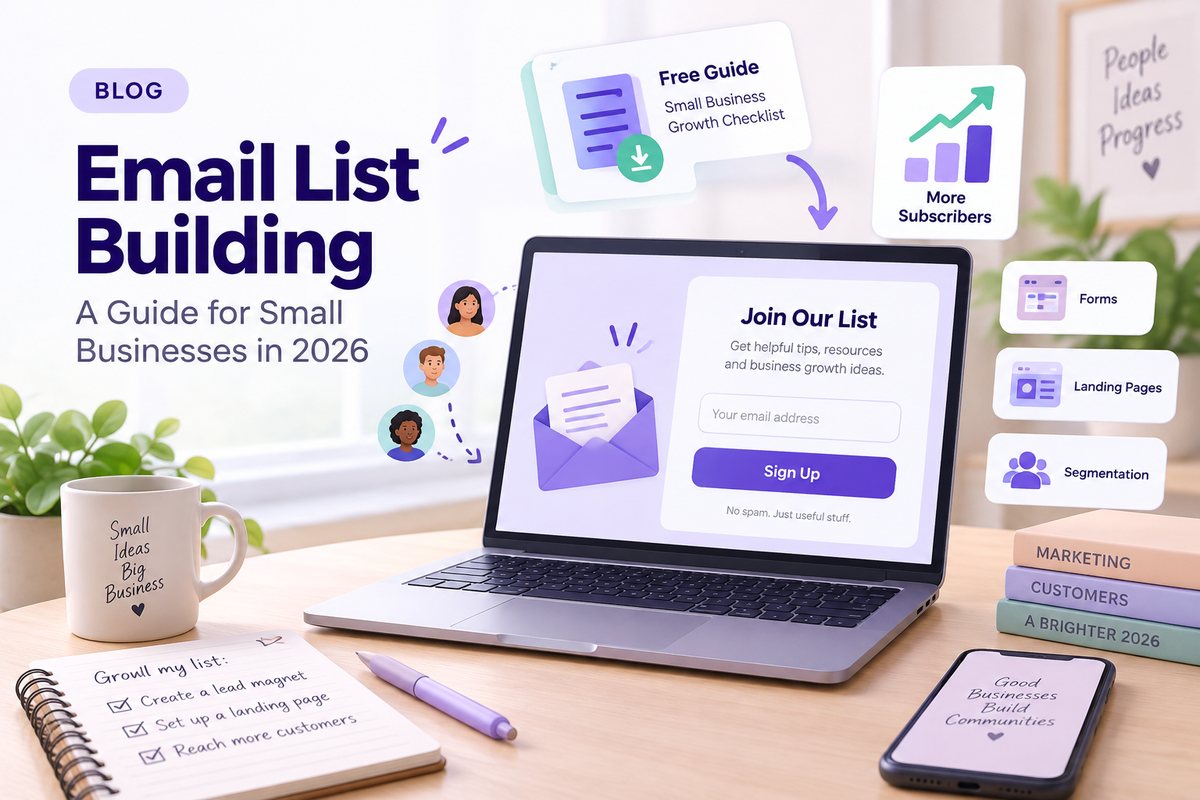
Even lists under 1,000 email subscribers can produce meaningful revenue or donations if they are permission-based and engaged. Focus on quality over quantity: clear offers, strong subject lines, and highly relevant content tailored to what those specific subscribers care about. Use the 2026 season partly as a list-building opportunity-promote signup forms on your website and social, offer a simple lead magnet or holiday guide, and ensure every in-person interaction invites email opt-in.
How can I avoid annoying subscribers with too many promotions?
Segmentation and content variety are your best protections against fatigue. Mix gift guides, tips, and stories alongside pure discount emails. Be transparent about frequency (“You’ll hear from us a bit more between Black Friday and Christmas”) and offer easy preference management. Monitor customer engagement and trim or re-engage inactive subscribers instead of continuing to hit them with every promotion.
When should I start planning my 2027 holiday marketing campaigns?
Do a quick review in January 2027 while 2026 results are fresh, then begin formal planning around May or June 2027. Early planning allows time to refine offers, update automations, create new email templates, and test new marketing channels before peak season. Reuse what worked in 2026 as a baseline, improving step by step rather than rebuilding from scratch.
© 2026, Vertical Response. All rights reserved.




 Features
 Pricing
 Partner
 Blog
Blog Support
 More resources
 Terms of Services
 Privacy Policy